Last Updated on June 1, 2026 by David
High-gloss finishes on Victorian tile floors can dramatically elevate the visual appeal of a space, turning a worn surface into a captivating centrepiece. it is vital to understand that aesthetic beauty does not necessarily correspond with practical functionality. Although many floors may seem stunning after sealing, they can later develop issues such as clouding, uneven shine, whitening, or peeling. Homeowners often wonder whether these challenges stem from dirt, wear, moisture ingress, or defects in the finish itself.
Identify the Key Factors Behind High-Gloss Finish Failures on Victorian Tiles
What Causes Cloudy Patches to Appear After an Initial Perfect Finish?
If you observe cloudy patches, peeling gloss, or inconsistent shine on your Victorian tiles following a flawless application, it indicates that the finish is not performing uniformly across the entire floor. Certain areas may remain bright and reflective, while others develop dull grey or milky patches. Homeowners often believe that a simple cleaning will solve the problem, yet frequent washing frequently proves to be ineffective.
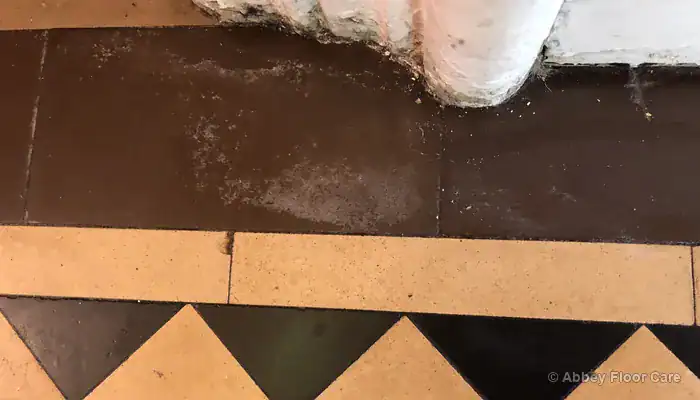
Cloudy patches usually suggest that the issue lies within or beneath the glossy layer rather than merely on the surface. Affected regions may remain visible even after thorough mopping, becoming more pronounced under natural light or viewed from specific angles. The floor may appear clean while still exhibiting a patchy look, causing confusion for homeowners regarding the underlying cause.
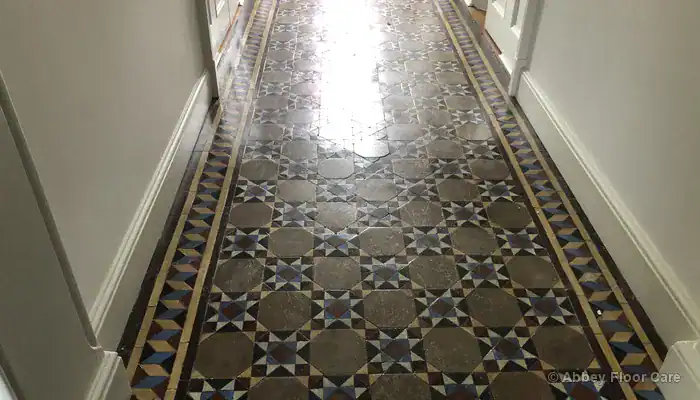
Variations in reflectivity can lead to confusion, as some sections maintain their aesthetic appeal while others show signs of deterioration. Hallways may behave differently near doorways, external walls, and high-traffic areas. Over time, the contrast between glossy and dull sections becomes increasingly distinct, making it harder for homeowners to achieve a uniform appearance.
Homeowners experiencing similar symptoms may find case studies like this Victorian tile cleaning project in Windsor particularly enlightening, where initial appearance issues were incorrectly attributed to ordinary dirt retention, but required a more detailed investigation to uncover the floor's underlying condition.
Why Does My Floor Exhibit Patchy Shine and Uneven Surface Appearance?
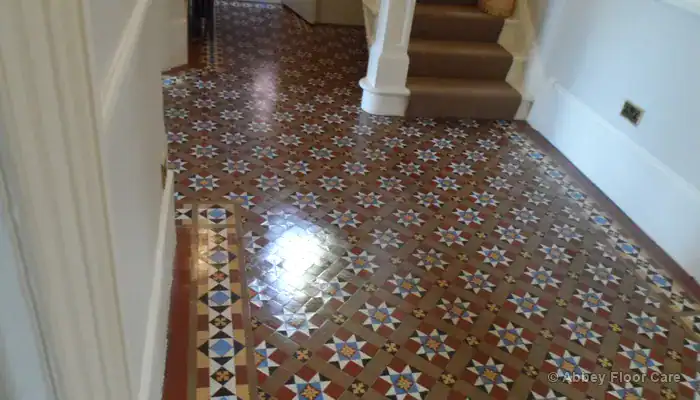
If your floor displays a brilliant shine in one area and a dull appearance in another, this often points to inconsistent performance across the surface rather than inadequate cleaning methods. This issue is particularly prominent in entrance halls featuring geometric patterns, where varying colours reflect light differently, further complicating visual uniformity.
A patchy gloss typically indicates that the finish is unable to create a uniform appearance across the entire floor. Sections of black, red, buff, and cream may seem to alter colour depending on the angle of view, leading to confusion regarding the floor's overall condition. One area may appear recently sealed while adjacent tiles look worn and lifeless, resulting in an uneven aesthetic.
It is common for colour variation to become more pronounced after cleaning, as moisture temporarily masks the contrast. Once the floor dries, the uneven appearance re-emerges, creating a frustrating cycle. This recurring issue can mislead homeowners into thinking their floor is becoming dirty more quickly than normal when, in fact, the visible problem is related to the finish itself rather than everyday wear.
How to Detect Peeling, Flaking, and Surface Separation Issues
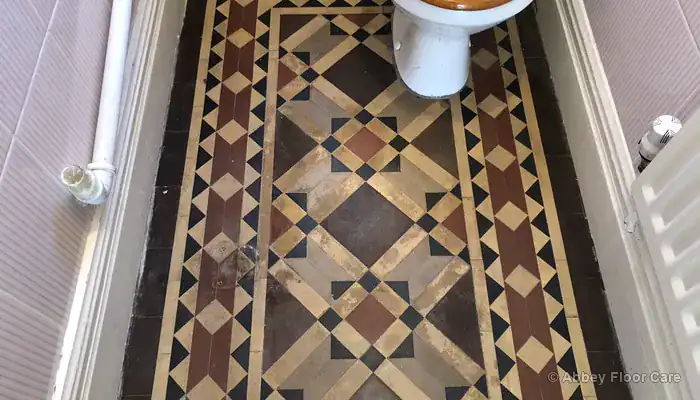
If your floor shows signs of lifting edges, flakes, or peeling sections, this condition is typically easier to spot than early-stage clouding. Small fragments may detach from the surface, particularly around doorways and other high-traffic areas. The finish may appear as a thin layer resting atop the tiles instead of being fully integrated into the overall floor aesthetic, raising concerns about its durability and long-term effectiveness.
Peeling often signifies that the visible coating is losing its ability to maintain visual stability and integrity. Affected areas may attract dirt more quickly than their surroundings due to small breaks in the surface, which become increasingly noticeable with regular use. This inconsistency can lead to repeated cleaning attempts, yet washing alone seldom restores the original appearance.
What to Watch for with Persistent Whitening and Surface Bloom?
If your floor displays a recurring pale haze, it may be misidentified as detergent residue or ordinary dirt accumulation. This whitening can become more pronounced during damp weather and less visible during extended dry spells, complicating the cleaning process. Some homeowners describe it as a dusty appearance seemingly trapped beneath the gloss, which can be frustrating to manage.
Recurring whitening indicates that the issue is not typical dirt accumulation. Surface cleaning may remove loose contaminants, but it fails to eliminate the visual effect itself. The floor may seem improved for a brief period before the pale haze returns, creating a cycle of temporary relief followed by disappointment.
A particularly useful diagnostic clue is the repetitive nature of the problem. Ordinary dirt typically changes when cleaned. In contrast, recurring whitening follows a predictable cycle and returns despite regular maintenance efforts. Recognising this pattern helps differentiate finish-related issues from straightforward housekeeping challenges, allowing for more effective solutions.
Comprehensive Checklist of Indicators for Gloss Finish Failures
- Cloudy or milky patches persist after cleaning.
- Some sections are glossy while others appear flat.
- A pale haze re-emerges consistently.
- Peeling or flaking occurs near high-traffic routes.
- Colour depth varies unevenly across the floor.
- The floor looks cleaner when wet than when dry.
- Appearance issues recur despite diligent maintenance efforts.
A restored Victorian tile floor reveals the original fired matte surface with consistent colour and pattern, while a topically sealed surface — when appropriate — introduces a subtle protective sheen without altering its period character. Identifying these visible symptoms is the first step in diagnosis, as floors that appear similar may have vastly different underlying causes requiring tailored solutions.
Understanding Why Older Victorian Tile Floors Exacerbate Moisture and Salt Problems
The movement of moisture from beneath is often the primary factor contributing to an unstable gloss finish on Victorian tile floors. Many original Victorian floors were laid without modern damp-proof barriers, remaining connected to moisture in the surrounding ground conditions. Water vapour can rise through the floor structure, carrying dissolved minerals towards the visible surface, resulting in unsightly deposits.
Moisture trapped beneath a coating will inevitably find a way to escape, often resulting in visible damage.
Victorian encaustic and geometric tiles are clay-fired at high temperatures. While their fired surface is chemically stable, it is physically vulnerable to abrasion and not compatible with acidic cleaning products. As moisture reaches the surface and evaporates, white deposits can form, contributing to haze, whitening, or recurring bloom, which may be mistaken for dirt even after multiple cleaning attempts.
For further insights on safe restoration methods, refer to this guide to restoring Victorian floor tiles safely, which offers practical guidance for homeowners.
How to Spot Warning Signs of Potential High Gloss Finish Failures on Victorian Tiles
If your Victorian tile exhibits recurring haze after cleaning, the likelihood of future finish instability is considerably higher than on a floor that maintains a consistent appearance year-round. Repeated whitening, patchy drying, and changing appearance patterns often indicate conditions that require closer examination and more proactive management.
Lower-risk scenarios typically involve isolated appearance issues that remain stable over time. A floor might show minor wear or localised dullness yet continue to dry consistently and maintain a predictable look throughout seasonal changes, making it easier for homeowners to manage.
Higher-risk conditions frequently involve recurring white deposits, uneven drying patterns, persistent bloom, or a history of previous coating failures. Floors that exhibit noticeable differences after wet weather compared to dry conditions deserve particular attention, as the symptoms are consistent rather than random, indicating deeper issues that may need intervention.
In my experience, consistently overlooking recurring haze, salts, or uneven drying often leads to larger finish failures later on. The warning signs themselves are often more diagnostically significant than the current level of shine, directing homeowners towards timely and effective solutions.
Prioritising Moisture Stability Over Shine When Evaluating Victorian Tile Finishes
Breathability testing provides a much clearer understanding than appearance alone when assessing the suitability of a finish. A floor that appears dry on the surface can still experience moisture movement beneath, making visual appearance an unreliable guide. Homeowners must prioritise moisture stability over mere aesthetics to ensure long-term durability.
Stable floors typically demonstrate predictable drying behaviour, a consistent appearance, and no recurring whitening, indicating a successful management strategy. Small trial areas and absorption observations can yield valuable insights into how the surface responds before making broader decisions regarding maintenance or restoration.
Moisture-active floors often exhibit changing appearance patterns, recurring deposits, or seasonal variations. In these cases, assessment should focus on moisture stability, vapour escape, and overall floor behaviour rather than solely striving for the highest possible shine, as this can lead to further complications down the line.
Breathable protection systems and penetrating treatments are often assessed alongside coating options, as suitability depends on floor behaviour rather than merely aesthetic preferences, highlighting the necessity for a holistic approach to floor maintenance.
Making Informed Choices Regarding Victorian Tile Sealer Recommendations
Professional recommendations are most effective when they accurately reflect the actual behaviour of the floor. A recommendation based solely on desired appearance is less useful than one that considers moisture behaviour, absorption characteristics, and expectations for long-term performance. Homeowners should seek advice that balances aesthetics with functionality.
Before accepting a recommendation, consider whether the assessment took into account drying behaviour, visible warning signs, and the potential for recurring deposits. Floors with a history of clouding, bloom, or coating instability require different considerations than those that have remained visually stable for decades, ensuring that the approach is tailored to the specific needs of the floor.
It is also beneficial to verify whether broader diagnostic resources support the recommendation. The main Victorian tile cleaning and care hub offers additional information on colour recovery, cleaning decisions, restoration priorities, and condition assessment, equipping homeowners with the knowledge needed to make informed choices.
Understanding the distinctions between surface dirt, recurring deposits, moisture-related whitening, and genuine finish failure simplifies the evaluation of advice and aids in selecting a strategy that accurately reflects the floor's condition, ensuring better outcomes for maintenance and restoration.

David Allen — Abbey Floor Care
David Allen has dedicated decades to working with historic clay tile surfaces and period entrance floors across the UK. His expertise lies in diagnosis, condition assessment, and assisting homeowners in understanding the distinction between appearance problems and the underlying behaviour of their floors, ensuring effective solutions.
The Article Victorian Tile Sealer Problems Often Start Below first appeared on https://www.abbeyfloorcare.co.uk
The Article Victorian Tile Sealer Issues Often Begin Beneath appeared first on https://fabritec.org
The Article Victorian Tile Sealer Problems Often Start Below the Surface Was Found On https://limitsofstrategy.com
The Article Victorian Tile Sealer Issues Often Begin Beneath the Surface found first on https://electroquench.com