Transforming your attic can create one or two additional livable spaces without extending the physical limits of your home. This approach is particularly advantageous for heritage properties featuring slate roofs, where understanding the unique characteristics of the roof at the outset of the renovation project is essential, revealing benefits that may not be immediately obvious.
In Sydney’s inner suburbs, including Paddington, Glebe, Balmain, Leichhardt, Newtown, and Rozelle, many Federation and Victorian terrace houses are situated on compact plots. Expanding outward is often impractical, and elevating these homes is frequently not an option. For homeowners seeking to add extra bedrooms without the need to relocate, converting the attic often emerges as the most viable solution.
This innovative approach is gaining popularity across Sydney. For homes with slate roofs, understanding the roof’s distinctive features from the beginning is crucial to ensuring the project’s success, turning a common concern into a significant advantage.
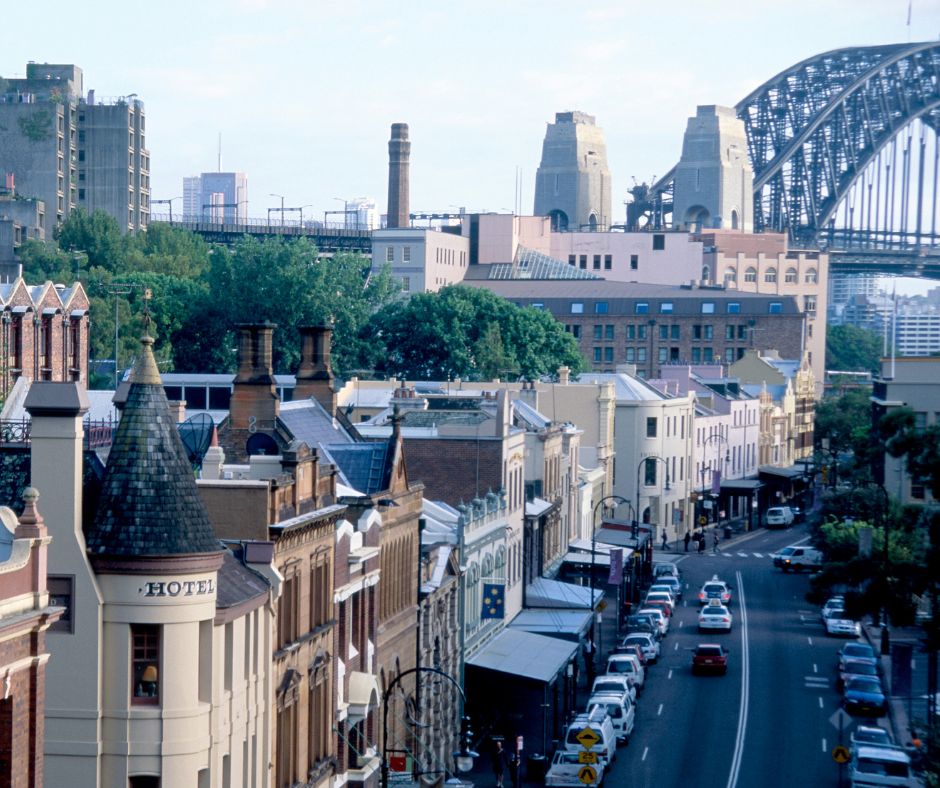
The Importance of Attic Conversions in Sydney’s Real Estate Market
Attic conversions have been a prevalent practice in the UK. In urban centres like London and Manchester, transforming roof spaces is a common response to the escalating demand for additional living areas, supported by housing availability, planning regulations, and a wealth of skilled builders.
Sydney is now beginning to adopt this trend. The same factors that have driven the movement in the UK are emerging in Australia: soaring land values in the inner city, narrow lot sizes, and a significant number of Federation and period homes, coupled with property prices that make moving a daunting financial task. For an extended period, Australians have favoured rear extensions or complete rebuilds as methods to add space; however, the current real estate climate calls for a strategic reassessment.
An increasing number of dedicated attic conversion specialists are surfacing in Sydney, responding to a growing volume of inquiries from homeowners. For those residing on small inner-city blocks, who previously thought their only options were to extend, subdivide, or sell, the potential of the roof space above warrants careful consideration.
Is an Attic Conversion a Wise Financial Investment?
For suitable properties, the answer is a resounding yes. The advantages are evident: you can create one or two functional rooms without expanding the building’s footprint, thus avoiding the need for ground-level extensions or the disruption of a complete rebuild. In Sydney’s inner suburbs, where land is both limited and expensive, this option is particularly attractive.
The key practical considerations revolve around two primary factors: does the roof space offer sufficient height, and what is the current condition of the existing roof? Both aspects can be evaluated early in the process, preventing large financial commitments to design or approvals. Conducting a thorough structural evaluation and obtaining a roof condition report from the outset provides homeowners with a clearer understanding of their options, often revealing outcomes that are more favourable than initially anticipated.
Will an Attic Conversion Under a Slate Roof Become Unbearably Hot? Understanding the Benefits of Slate
This concern is frequently the first question raised about attic conversions in Sydney. Many presume that a room directly beneath the roof will become a heat trap during the summer months. While this concern is valid, a well-executed conversion beneath a slate roof can maintain temperatures that are much more consistent than one might expect.
Although cooling solutions will be necessary during the summer, the discomfort is not as extreme as some anticipate.
Natural slate has a high thermal mass, allowing it to absorb heat gradually throughout the day and release it slowly, thereby preventing sudden temperature spikes that could affect the space below. In contrast, metal roofing heats up and cools down quickly, causing the rooms beneath to feel every degree of a sweltering Sydney afternoon. Slate acts as a thermal buffer, significantly enhancing the overall performance of the newly created living space.
When combined with high-quality sarking and correctly installed insulation in the rafters, a slate roof offers considerable advantages that other roofing materials cannot match.
In Sydney’s climate, particularly for west-facing rooms in inner-city terrace houses, this thermal stability is an invaluable asset. For heritage homes where the slate roof is preserved during a conversion, it is crucial to recognize that the roof already plays a significant role in thermal regulation, often more than one might expect. A skilled designer can leverage this feature, enhancing rather than undermining its benefits.
Navigating Heritage Regulations for Attic Conversions
Properties located in Sydney’s heritage conservation areas are subject to planning regulations that dictate what modifications can be made to the roof. While specific rules vary by council, the general guidelines remain consistent and should be understood rather than feared.
Modifications to roof pitch and ridge line are generally restricted. Homeowners cannot increase the height of an existing heritage roof or alter the ridge line. While these restrictions may limit conversions on certain properties, many Federation and Victorian terraces already possess sufficient roof height to comply with these regulations.
Changes visible from the street are often limited. Typically, dormer windows on the front facade are not permitted on heritage properties. Skylights are generally acceptable but must align flush with the roofline. Rear dormers, when permitted, often face fewer restrictions; many inner-city terraces have their rear facades facing a lane or garden rather than the street.
A Heritage Impact Statement is often required. Most councils in inner Sydney mandate this document for any work on a listed property or within a conservation area. Prepared by a heritage consultant, it demonstrates that the proposed alterations do not detract from the heritage significance of the building. While this step is essential, it is standard practice; heritage architects and consultants routinely manage such processes.
Approvals are typically obtained through a Development Application (DA). Heritage properties usually require a DA rather than a Complying Development Certificate. While DAs involve more time and scrutiny, they are not obstacles; instead, they represent the appropriate pathway for these types of projects.
What Should Be Done with the Roof During an Attic Conversion?
Engaging a specialist slate roofer as part of the project team from the outset is invaluable, rather than waiting until the end to involve them as a subcontractor.
Before delving too deeply into the design phase, it is vital to assess the condition of the existing slate roof. Key inquiries include: what is the roof’s condition, how much lifespan remains, and what implications does this have for the project?
Typically, two outcomes arise from this assessment, both of which are manageable.
The roof can be preserved and worked around. If the slate is in good condition, with secure fixings, intact sarking, and no significant movement or water ingress, it may be possible to proceed with the conversion while leaving the roof largely undisturbed. This scenario benefits both heritage compliance and budget considerations and is more common than many realize in well-maintained period homes.
Alternatively, the roof may need to be replaced. If the roof is nearing the end of its lifespan, the conversion presents an opportunity to address both tasks simultaneously. A comprehensive re-roof can be carried out alongside the conversion, utilising new materials that comply with heritage standards. For listed properties, this typically involves natural slate — a like-for-like replacement that meets council requirements and ensures durability for another century. The thermal advantages of the new slate roof will be available from day one.
In either scenario, understanding the roof’s condition early on facilitates accurate project scoping and pricing from the outset, preventing unexpected costs during the renovation process.
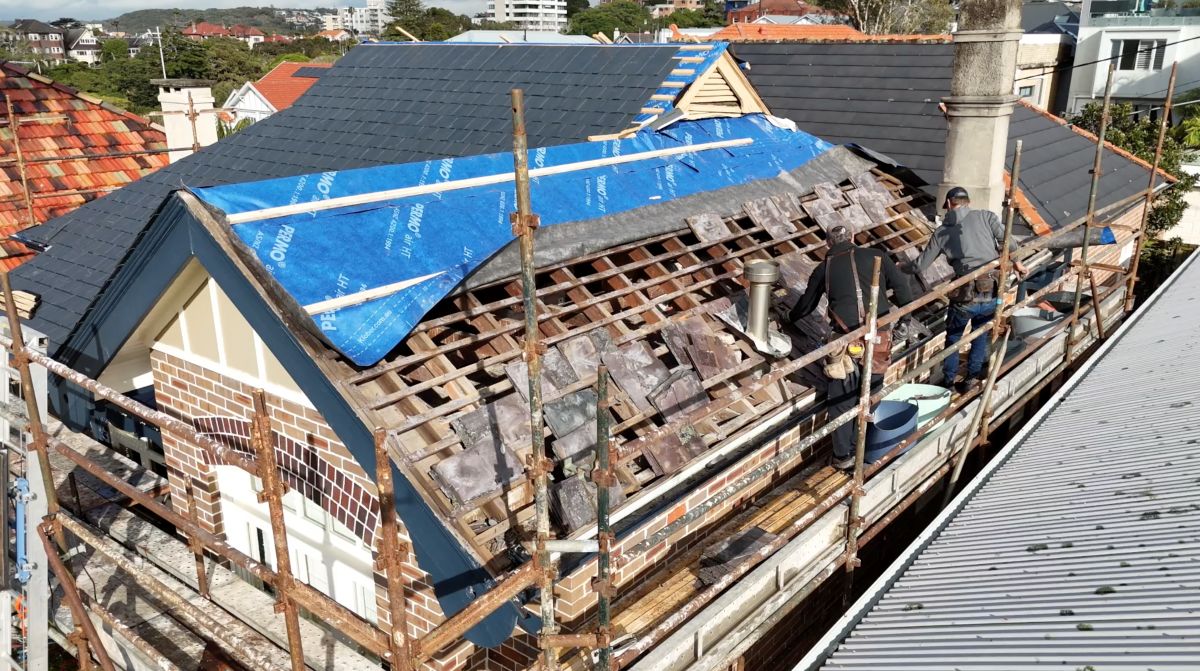
Key Insights for Builders Managing Attic Conversion Projects
For builders overseeing attic conversion projects on heritage properties, the slate roof represents a specialised area that extends beyond standard building practices. It requires expertise not only in the material but also in the heritage planning context.
Involving a specialist slate roofer during the assessment stage — before lodging the DA — equips the project team with precise insights regarding the roof’s condition, anticipated lifespan, and council requirements in terms of materials and methodologies. This information is essential for the DA documentation, project timeline, and budget, enabling smoother approvals as the heritage architect and roofing contractor collaborate with a unified set of facts.
We collaborate with builders throughout Sydney on this basis. Our services include assessing the existing roof, providing written condition reports, advising on heritage compliance requirements, and executing roofing work — whether that involves preservation and repair or full replacement — as part of the overall project.
Top Suburbs in Sydney for Attic Conversions
The inner west and inner east emerge as regions where narrow blocks, heritage listings, and original slate roofs are most prevalent. Suburbs such as Paddington, Glebe, Balmain, Rozelle, Leichhardt, Newtown, Annandale, and Erskineville receive the highest volume of inquiries regarding these conversions. These areas have also experienced some of the steepest rises in land values, making the case for maximising existing footprints particularly compelling.
While the Northern Beaches has its own collection of heritage homes, the inner city presents the most significant opportunities for attic conversions involving heritage slate roofs.
How We Can Support Your Attic Conversion Project
We do not directly undertake attic conversions. Instead, we focus on evaluating and working on the roof — including the slate, sarking, battens, fixings, and ridge treatment — to ensure compliance with heritage council requirements.
If you are a homeowner considering a conversion on a heritage property, or a builder managing a project involving a slate roof, we are more than happy to visit, assess the roof, and provide you with a clear understanding of your situation. In most cases, the discussion is more optimistic than anticipated.
Contact us at 0431 593 625 or reach out to us here.
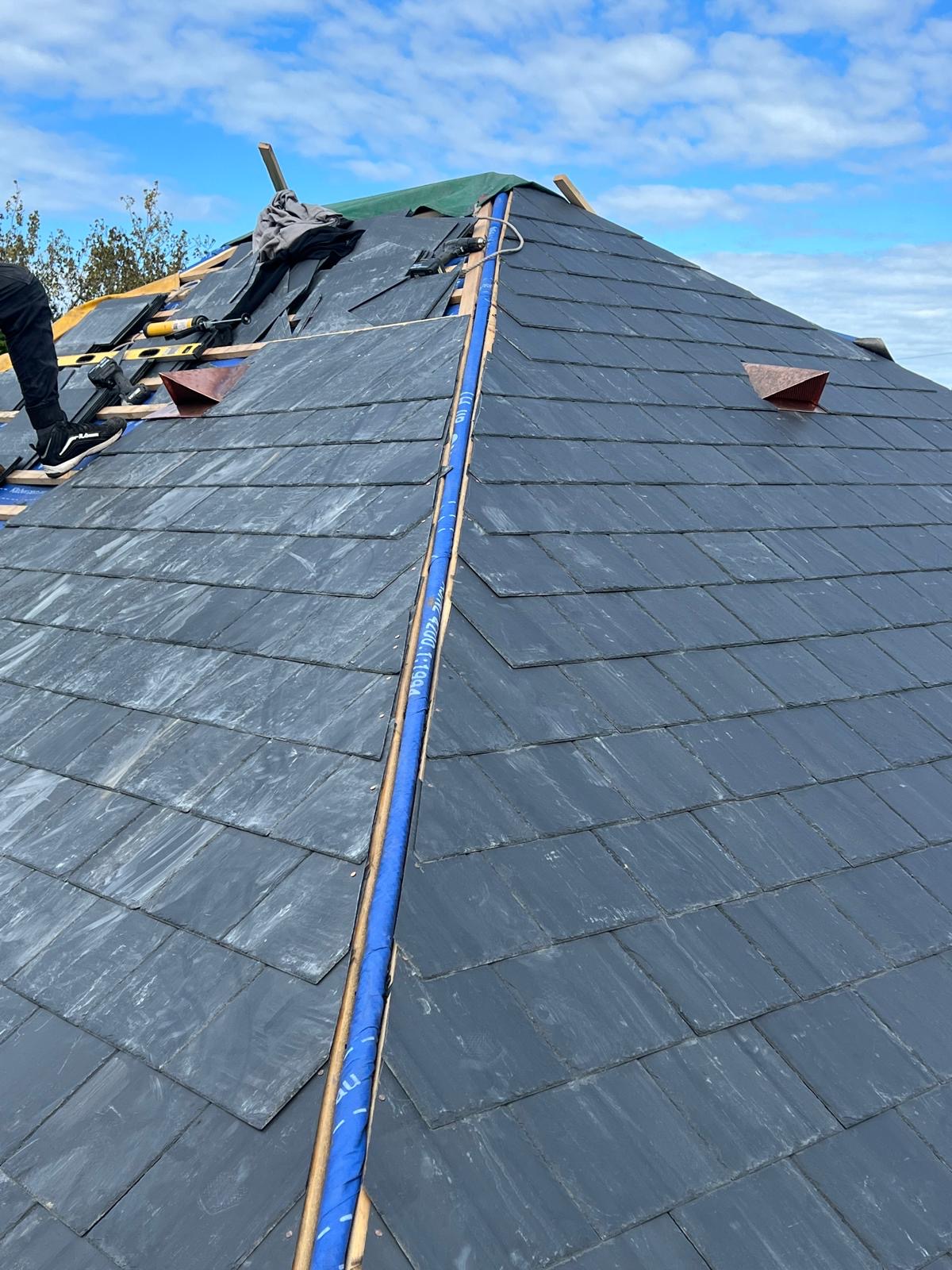
Your Comprehensive Guide to Attic Conversions and Heritage Slate Roofs
Is an attic conversion a viable option for a heritage home in Sydney?
For many inner-city properties, this represents one of the most effective strategies to create additional livable space. When outward expansion is impractical and a complete rebuild is financially unfeasible, the roof space often becomes the sole viable solution. The success of this approach for a specific property hinges on the available height in the roof space and the condition of the existing roof — both of which can be assessed early in the process to avoid unnecessary expenses.
Will an attic room beneath a slate roof be excessively hot during the summer months?
This is a common concern, but slate actually alleviates the situation. Natural slate boasts high thermal mass, allowing it to absorb heat gradually and release it slowly, thereby minimising temperature fluctuations rather than exacerbating them. When combined with quality sarking and properly installed insulation between the rafters, a properly structured slate roof supports a comfortable living environment throughout the year. It provides a significantly superior thermal starting point compared to metal roofing.
Does being classified as a heritage property eliminate the possibility of an attic conversion?
Not necessarily. Heritage regulations restrict certain changes — including modifications to roof pitch, ridge line, and alterations visible from the street — but many Federation and Victorian terraces have adequate existing roof height to operate within these guidelines. Rear dormers often face fewer restrictions than front-facing ones. A heritage architect can provide insights into what is feasible for a specific property, while a slate roof specialist can confirm if the roof is suitable for the conversion project.
What approvals are required for an attic conversion on a heritage property in Sydney?
Most heritage properties in Sydney necessitate a Development Application (DA) rather than a Complying Development Certificate. A Heritage Impact Statement prepared by a heritage consultant is typically required. This document outlines how the proposed work respects the heritage significance of the building. The process is well-established and routinely handled by heritage architects and consultants operating in the inner suburbs.
Is it necessary to replace the existing slate roof when undertaking an attic conversion?
Not always. If the slate is in good condition — with secure fixings, intact sarking, and no significant water ingress or movement — it may be possible to proceed with the conversion while largely leaving the roof intact. If the roof is nearing the end of its lifespan, the conversion offers an opportunity to re-roof and convert simultaneously, using new slate specified to meet heritage standards. An early condition assessment will determine the appropriate course of action.
What does a slate roof condition assessment entail?
We conduct an in-person inspection of the roof, evaluating the condition of the slate, fixings, sarking, battens, and ridge treatment. Following this, we provide a written report detailing our findings, the roof’s remaining lifespan, and the roofing work necessary to facilitate the conversion. This report can be utilised by the project architect and referenced in the DA documentation.
Can you collaborate with an attic conversion builder on a heritage project?
Yes, we regularly partner with builders across Sydney during both the assessment phase and construction stage. Our focus lies on the roof — including assessment, condition reporting, heritage compliance advice, and the roofing work itself. While we do not manage the conversion, we ensure that the roof component is effectively handled as part of the overall project.
Which suburbs in Sydney are optimal for attic conversions on heritage slate roofs?
The inner west and inner east showcase the highest concentration of favourable conditions — Federation and Victorian terraces situated on compact blocks with original slate roofs and heritage listings. Paddington, Glebe, Balmain, Rozelle, Leichhardt, Newtown, Annandale, and Erskineville are the suburbs where we receive the most inquiries of this nature. Although the Northern Beaches also has a collection of heritage homes, the inner city is where these conditions align most frequently.
What steps should I take to kickstart my attic conversion project?
Contact us at 0431 593 625 or submit a contact form.
We will arrange a visit to conduct a roof assessment to evaluate your options. For builders, we are prepared to be involved at any stage of the project — the earlier, the better.
Original Article First Published At: Attic Conversions and Heritage Slate Roofs in Sydney: What Homeowners and Builders Need to Know
The Article: Attic Conversions and Heritage Slate Roofs: A Guide for Sydney Homeowners first appeared on https://writebuff.com
The Article Attic Conversions: A Guide for Sydney Homeowners with Slate Roofs Was Found On https://limitsofstrategy.com
The Article Attic Conversions for Sydney Homeowners with Slate Roofs found first on https://electroquench.com